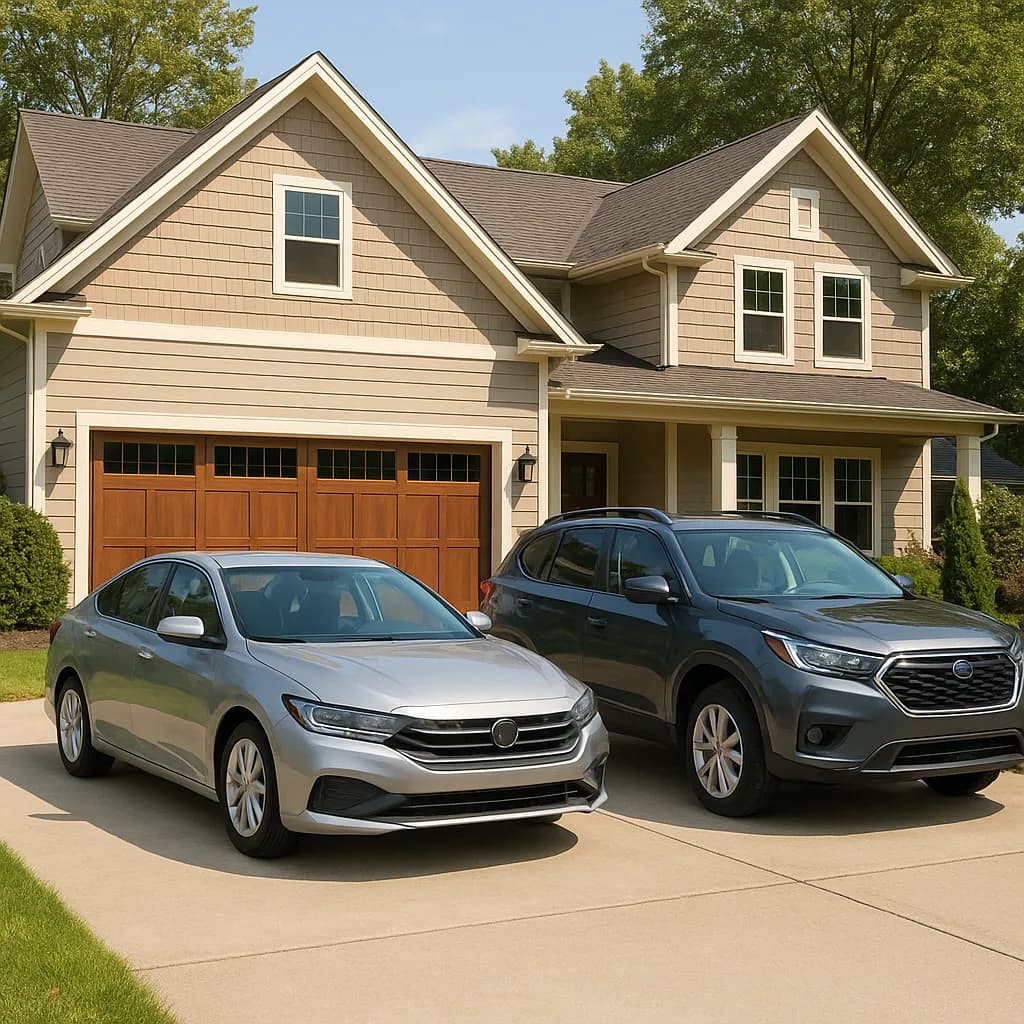
The Structural Conflict Between Shared Vehicles and Separate Addresses
You're managing two households that share vehicles between addresses. Maybe it's a college student who drives a family car at school and home, adult children splitting time between two parents' homes, or roommates who own cars together but live at different addresses part-time. You need to know whether one policy covers both locations or whether each household needs its own.
The structural reality: carriers define a household by garaging address and policy ownership. The multi-car discount requires every vehicle on the same policy, but garaging rules require each car to be rated and covered at the address where it's parked overnight most often. When vehicles split time between two addresses, that structural conflict forces a choice between discount eligibility and accurate garaging disclosure.
Compare car insurance rates in your state
Get quotes from licensed carriers — no obligation, no spam, results in minutes.
Get Your Free QuoteNational Auto Premium Range
$61–$120/mo
The average monthly auto insurance premium across all driver profiles ranges from approximately $61 to $120 per month nationally. Households managing multiple vehicles across two addresses often face higher premiums due to split garaging and loss of multi-car discount eligibility.
NAIC 2023 Auto Insurance Database
How Carriers Define a Household for Multi-Car Policies
A multi-car policy requires every vehicle to be owned by or regularly used by members of the same household. Carriers define household as people living at the same address who share financial responsibility for the vehicles. The multi-car discount applies when all vehicles on the policy are garaged at the same address or at addresses the carrier considers part of the same household unit.
The garaging address is the location where the vehicle is parked overnight most often. It determines the rating territory, theft risk, and coverage cost. When a vehicle splits time between two addresses, the carrier requires you to declare the primary garaging location. If the vehicle spends equal time at both addresses, the carrier typically assigns the garaging address based on where the vehicle is registered or where the policyholder's primary residence is located.
Two households sharing vehicles creates a structural problem: if the vehicles are garaged at different addresses and those addresses are not considered part of the same household, the multi-car discount does not apply. Some carriers allow a student away at school to remain on the family policy with a temporary garaging address, but that exception does not extend to two separate permanent residences.
The multi-car discount requires same-address garaging or a carrier-approved household exception. Two permanent addresses with shared vehicles do not qualify unless one address is declared primary for all cars.
Structuring Coverage When Vehicles Split Between Two Addresses

If one household owns all the vehicles and the second address is temporary or secondary, declare the primary household address as the garaging location for every vehicle. Add all drivers at both addresses to the policy as listed drivers. The carrier rates the policy based on the primary garaging address, and the multi-car discount applies. This structure works when a college student, adult child, or family member uses a vehicle at a secondary address but the vehicle is owned by and registered to the primary household. The carrier must be told about all drivers and all addresses where vehicles are used, but the garaging address remains the primary household location.
If the two households are separate permanent residences with independent ownership or financial responsibility, each household needs its own policy. The multi-car discount applies within each household's policy, but not across the two policies. A vehicle cannot be garaged at two addresses simultaneously, and carriers do not allow one policy to cover vehicles permanently garaged at unrelated addresses. In this structure, each household insures the vehicles it owns and garages, and any shared-use arrangement between the households is disclosed to both carriers as permissive use by non-household drivers.
Related Articles






Failure Modes and Disclosure Requirements
The most common failure mode is misrepresenting the garaging address to preserve the multi-car discount. If you declare all vehicles garaged at one address when they are actually split between two permanent residences, the carrier can deny a claim based on material misrepresentation. Garaging address determines rating territory, and rating territory determines premium. A vehicle garaged in a higher-risk zip code but rated in a lower-risk one is mispriced, and the carrier has no obligation to pay a claim on a mispriced policy.
Another failure mode is assuming permissive use covers regular shared access. Permissive use allows occasional use of a vehicle by a non-household driver, but it does not cover a vehicle that is regularly driven by someone at a second address. If a vehicle is used regularly at both addresses, both households' drivers must be listed on the policy, or the second household must carry its own coverage. Unlisted regular drivers create coverage gaps.
When a vehicle is registered at one address but garaged at another, the carrier requires the garaging address to match the actual overnight parking location. Registration address and garaging address do not have to match, but the garaging address must be accurate. If the vehicle is registered to a parent's address but garaged at a college student's apartment, the garaging address is the apartment, and the carrier rates the policy accordingly.
National Carrier Roster Size
34 carriers
Thirty-four major carriers write multi-car policies nationally, and garaging-address rules vary by carrier. Some carriers allow temporary secondary garaging for students or seasonal residents; others require separate policies for any vehicle garaged outside the primary household address for more than a set number of days per year.
NAIC carrier licensing data
When One Policy Works and When It Does Not
One policy works when the two addresses are part of the same household unit in the carrier's definition. A college student living in a dorm or off-campus apartment while attending school full-time typically qualifies as a temporary secondary address under the family policy. The student is listed as a driver, the school address is disclosed, and the vehicles remain garaged at the family's primary address unless the student has exclusive use of a vehicle at school. In that case, the carrier may allow the school address as a secondary garaging location under the same policy, but not all carriers do.
One policy does not work when the two addresses are independent permanent residences with separate financial responsibility. Adult children living independently, divorced parents sharing custody and vehicles, or roommates who own cars together but live at different addresses cannot consolidate under one multi-car policy. Each address requires its own policy, and any shared vehicle use between the two households is disclosed as permissive use or as a listed driver on both policies if the sharing is regular.
Compare Carriers and Declare Garaging Accurately
The next step is to compare carriers that write multi-car policies in both states or rating territories where the vehicles are garaged. Garaging-address rules vary by carrier, and some carriers are more flexible about secondary addresses than others. Get quotes from at least three carriers, disclose both addresses and all drivers up front, and ask each carrier how they handle the specific garaging arrangement you're managing. The carrier's underwriting rules determine whether one policy works or whether each household needs its own, and that determination must happen before you bind coverage, not after a claim is filed.