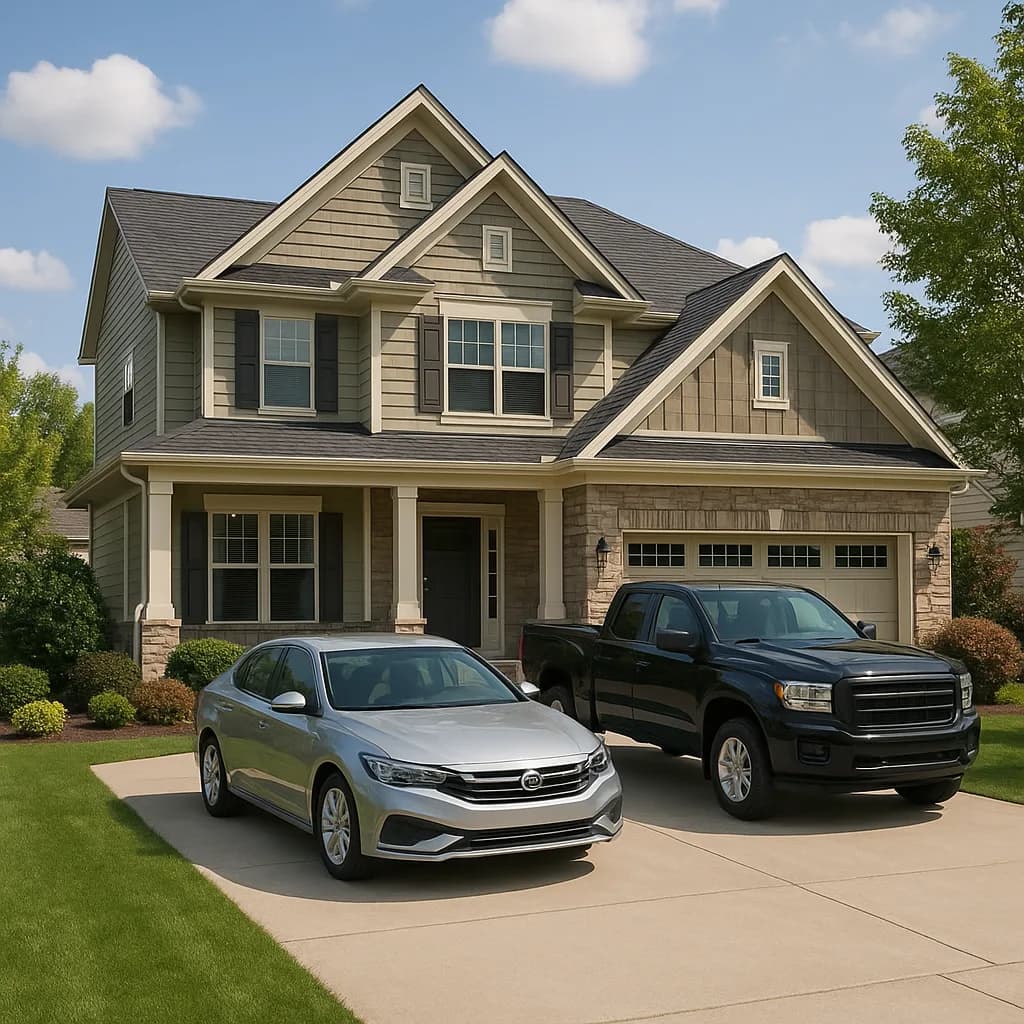
When Two Cars Garage at Different Addresses
You own a car you drive daily in the city where you work, and a second car garaged at a vacation property or a family member's address two counties away. You want both on one policy to keep the multi-car discount, but your carrier says the garaging addresses must match. The rejection feels arbitrary — you own both vehicles, you are the named insured on both, and you want to pay one premium for both.
The structural reality: most carriers tie the multi-car discount to a shared garaging address because their underwriting models price risk by location. A car garaged in a high-theft urban ZIP and a car garaged in a rural county 200 miles away carry different risk profiles, and the carrier prices each vehicle separately. When the addresses differ, the carrier often treats them as two separate policies even when the same person owns both cars.
Compare car insurance rates in your state
Get quotes from licensed carriers — no obligation, no spam, results in minutes.
Get Your Free QuoteNational Carrier Roster
34 carriers
The national carrier roster includes 34 insurers writing multi-vehicle policies. Not all write split-address policies, but a subset will quote both vehicles on one policy when both addresses belong to the same named insured.
NAIC carrier licensing data, 2026
Why Carriers Require Shared Garaging
The multi-car discount exists because insuring multiple vehicles for one household costs the carrier less per vehicle than insuring each separately. Administrative overhead drops, retention improves, and the carrier spreads risk across the household. But the discount assumes the vehicles share a garaging location — same driveway, same garage, same overnight parking ZIP code.
When garaging addresses differ, the carrier's underwriting system flags the policy. One address might sit in a county with high uninsured-motorist rates; the other in a low-theft rural area. The carrier prices each vehicle to the risk profile of its own garaging ZIP. That breaks the shared-risk assumption the multi-car discount relies on, and most carriers will not apply the discount across split addresses.
A smaller number of carriers will write a single policy covering vehicles at two addresses when both belong to the same named insured. The policy still prices each vehicle to its own garaging location, but you pay one premium and manage one renewal. The multi-car discount may apply in reduced form, or the carrier may waive it entirely and price each vehicle independently while keeping them on the same policy document.
The blocker: your current carrier's underwriting rules do not permit split-address policies, and you need a carrier that does.
Carriers That Write Split-Address Policies
Progressive, Nationwide, and Travelers write split-address multi-vehicle policies in most states when both vehicles belong to the same named insured. The application asks for each vehicle's garaging address separately, and the underwriting system prices each to its own location. You receive one policy document, one renewal notice, and one payment schedule. The multi-car discount may apply in reduced form depending on how far apart the garaging addresses sit and whether the carrier's pricing model treats them as a single household risk.
State Farm and Allstate write split-address policies selectively. Both require the named insured to demonstrate an ownership interest in both properties — a deed, lease, or utility bill showing your name at both addresses. If one address belongs to a family member and you garage a car there occasionally, the carrier may decline or require that family member to be added as a named insured. USAA writes split-address policies for eligible members when one address is a primary residence and the other a secondary property, but USAA membership is restricted to military-affiliated households.
Related Articles






How Split-Address Policies Are Priced
Each vehicle on a split-address policy is priced to its own garaging ZIP code. The carrier pulls loss data, theft rates, uninsured-motorist percentages, and repair costs for each location separately. A car garaged in a high-density urban area will carry a higher premium than a car garaged in a low-density rural county, even when both sit on the same policy.
The multi-car discount applies to the combined premium in most cases, but the discount percentage is often smaller than it would be if both vehicles garaged at the same address. Some carriers apply the discount only to the lower-risk vehicle; others apply a flat percentage to the total premium regardless of garaging location. A few carriers do not apply the multi-car discount at all when addresses differ, treating the policy as a convenience consolidation rather than a true multi-vehicle household.
Adding or removing a vehicle mid-term re-rates the entire policy. If you sell the car garaged at the second address, the remaining vehicle's premium adjusts to reflect the loss of the multi-car structure. If you move one car to the same address as the other, the carrier re-prices both vehicles and the multi-car discount typically increases.
National Average Premium
$61.38–$119.87/mo
The national average monthly auto insurance premium ranges from $61.38 to $119.87 per vehicle. Split-address policies price each vehicle separately to its garaging location, so total premium depends on the risk profile of both ZIPs.
NAIC Auto Insurance Database, 2023
When Separate Policies Make More Sense
A split-address policy is not always the best structure. If the two garaging locations sit in different states, most carriers will not write a single policy — state insurance regulations require separate policies for vehicles garaged in different states. If one vehicle is driven by someone who does not live with you and is not a household member, the carrier may require that driver to carry their own policy.
If the multi-car discount does not apply or applies in reduced form, compare the split-address policy premium against two separate policies. Some drivers find that two standalone policies with different carriers cost less than one split-address policy, especially when one garaging location qualifies for a regional carrier with lower rates in that area. Run quotes both ways before committing.
Compare Carriers That Write Your Structure
Not every carrier writes split-address policies, and the carriers that do price them differently. Progressive may quote a lower combined premium than Nationwide for the same two vehicles at the same two addresses, or vice versa. The only way to know is to request quotes from multiple carriers that confirm they write split-address policies in your state.
Use a comparison tool that lets you enter separate garaging addresses for each vehicle. Confirm with each carrier that both vehicles will sit on one policy document, not two separate policies issued simultaneously. Ask whether the multi-car discount applies and at what percentage. Compare the split-address policy premium against the cost of two separate policies to confirm you are choosing the lower-cost structure.