
Which Carriers Structure Multi-Car Discounts
You're shopping for coverage across two or more vehicles, and every carrier you check advertises a multi-car discount. The discount exists at nearly every major carrier, but the size of the advertised discount tells you almost nothing about what you'll actually pay. The carrier with the largest advertised discount often has a higher base rate, and a smaller discount on a lower base rate beats a larger discount on a higher one.
The structural question is not which carrier advertises the biggest discount. It's which carrier writes your household's vehicles at the lowest combined premium after the discount applies, and whether your household structure qualifies for the same-policy requirement most carriers impose. A discount that requires every vehicle titled to the same person and garaged at the same address does not help a household where one car is titled to a spouse at a different address or a college-age driver living elsewhere.
Compare car insurance rates in your state
Get quotes from licensed carriers — no obligation, no spam, results in minutes.
Get Your Free QuoteNational Carrier Roster
34 carriers
The national carrier roster includes 34 major auto insurers writing policies across multiple states. Not all write multi-vehicle policies in every state, and carrier availability varies by region and household structure.
NAIC carrier licensing data, 2026
Same-Policy Requirement Blocks Many Households
Most carriers require every vehicle receiving the multi-car discount to sit on the same policy. That sounds simple until you map it to your household. If you and your spouse each have a separate policy and you want to combine them, one policy must be canceled and all vehicles moved to the other. If a household member owns a car titled in their name but garaged at a different address, many carriers will not allow that vehicle on your policy.
The same-policy requirement is the structural blocker that prevents households from accessing the discount even when they own multiple cars. A college student's car titled to them and garaged at a campus address typically cannot join the family policy at the home address. A car titled to a parent but driven by an adult child living in a different city faces the same problem. The discount exists, but the household structure does not fit the carrier's eligibility rules.
Some carriers relax the same-address requirement if the second vehicle is garaged within the same state or if the titled owner is a listed driver on the policy. Others do not. The variation is carrier-specific, and you will not find it in the advertised discount language. You find it when you try to add the vehicle and the carrier declines or re-rates the policy without applying the discount.
The multi-car discount requires every vehicle on the same policy at most carriers. If your household's vehicles are titled to different people or garaged at different addresses, you may not qualify.
How Base Rate and Discount Interact
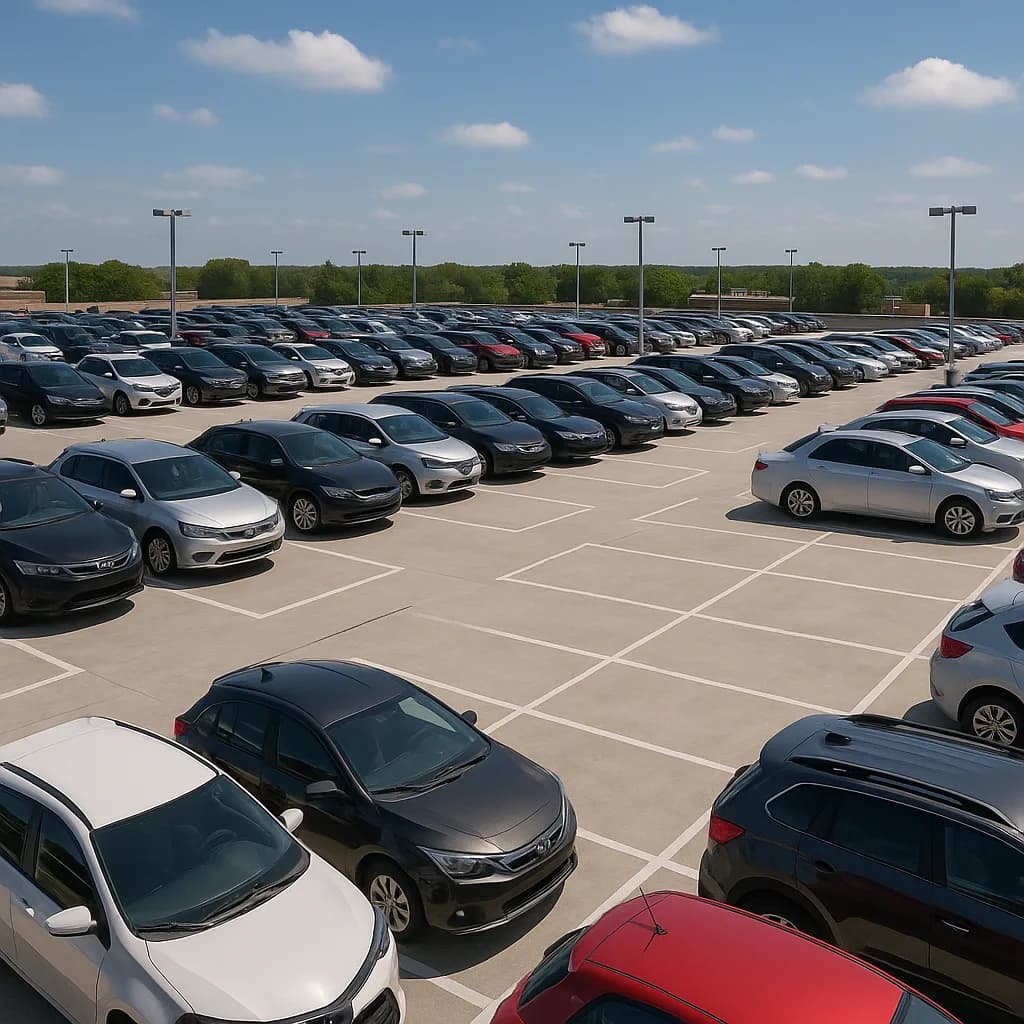
Carrier A might advertise a multi-car discount and quote a base rate that reflects their underwriting model, regional risk assessment, and claims history. Carrier B might advertise a smaller discount but start from a lower base rate because they specialize in multi-vehicle households or write more policies in your region. After both discounts apply, Carrier B's total premium can be lower even though their advertised discount was smaller.
This is why comparing advertised discount percentages produces the wrong answer. The only number that matters is the final quoted premium for all your vehicles combined. That number reflects the base rate, the discount, the household's driver profiles, the vehicles' garaging addresses, and the coverage selections. You cannot calculate it from the advertised discount alone. You need a quote from each carrier that writes your household structure.
Related Articles






Carriers That Write Multi-Vehicle Policies
State Farm, GEICO, Progressive, Allstate, Liberty Mutual, Farmers, Nationwide, USAA, Travelers, and American Family all write multi-vehicle policies and offer multi-car discounts. The discount structure varies by carrier. Some apply the discount to every vehicle on the policy. Others apply it only to the second and subsequent vehicles, leaving the first vehicle at the base rate.
USAA restricts eligibility to military members, veterans, and their families, but for households that qualify, USAA often delivers competitive multi-vehicle rates. Direct Auto, The General, and Bristol West write non-standard and high-risk policies and also offer multi-car discounts, though their base rates reflect the higher-risk driver profiles they specialize in. If your household includes a driver with a violation or lapse, these carriers may be the only ones willing to write all your vehicles on one policy.
Regional carriers like Erie, Auto-Owners, and CSAA write multi-vehicle policies in their operating states and often deliver lower combined premiums than national carriers in those regions. Availability is state-specific. A carrier that writes competitive multi-car policies in Ohio may not operate in Texas. The carrier roster in your state determines which options you can compare.
General Driver Monthly Premium Range
$61–$120/mo
National average monthly auto insurance premiums for general drivers range from $61 to $120 per vehicle. Multi-vehicle policies apply the discount to this base range, but the final premium depends on household structure, coverage selections, and state minimum requirements.
NAIC Auto Insurance Database, 2023
Adding a Vehicle Mid-Term Re-Rates the Policy
When you add a vehicle to an existing multi-car policy mid-term, the carrier re-rates the entire policy, not just the new vehicle. The multi-car discount recalculates across all vehicles, and the premium for vehicles already on the policy can change. If the new vehicle is a higher-risk model or driven by a higher-risk driver, the re-rating can increase the premium for every car on the policy, not just the one you added.
This is the failure mode most households do not expect. You assume adding a third car will cost only the incremental premium for that car. Instead, the carrier recalculates the discount, re-evaluates the household's total risk profile, and adjusts the premium for all three vehicles. The total increase can be larger than the cost of insuring the new vehicle alone on a separate policy. Some households discover this only after the vehicle is added and the new premium appears on the next bill.
Compare Carriers That Write Your Household Structure
The path forward is to request quotes from multiple carriers that write multi-vehicle policies in your state and confirm that your household structure qualifies for the same-policy requirement. Provide each carrier with the titled owner, garaging address, and driver profile for every vehicle. Ask explicitly whether all vehicles qualify for the multi-car discount under their same-policy and same-address rules. If a carrier cannot write all your vehicles on one policy, the advertised discount does not apply to your household.
Focus on the final combined premium after the discount, not the discount percentage. A carrier that applies a smaller discount to a lower base rate will deliver a lower total cost than a carrier with a larger advertised discount on a higher base. The comparison must include every vehicle and every driver in your household to produce an accurate result. Partial quotes that exclude one vehicle or one driver will not reflect the actual premium once the full household is added.